
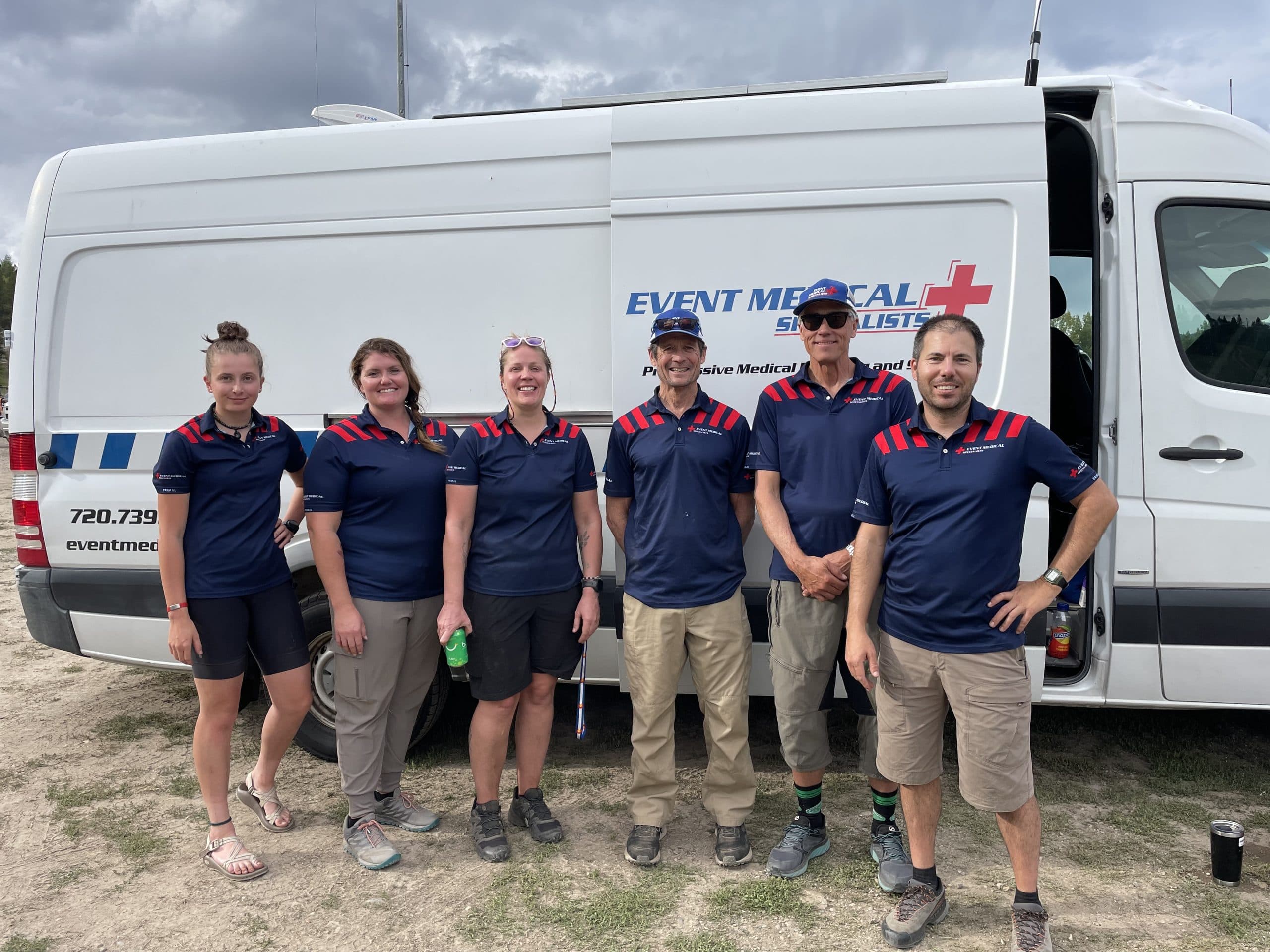
Event Medical Specialists covers more than 300 events a year. That puts us at a lot of start lines, aid stations, and finish chutes, and we see the good, the bad, and the great of athletic events. Here are a few of our observations to help race directors and promoters build events that are safer, smoother, and more successful.
Before the Event Starts
Start registration and promotion early. Don't panic if registration looks low. Especially in cycling, a majority of participants register at the cutoff or in the final week before the event.
Define your course cutoffs, then actually enforce them. Cutoffs do two jobs:
They are a safety tool that keeps undertrained athletes from being exposed on course too long.
They control costs and respect your volunteers' time by letting the event end within a predictable window.
Medical Staffing
Right-sized staffing. We work with you to determine the appropriate number and level of medical staff to cover your race within budget, according to industry norms, and to provide the care your participants may need. Our goal is reasonable response times to the majority of the course, without overstaffing your event.
Costs scale well with participants. The more entrants you get, the smaller the share of revenue medical costs represent.
Bigger courses cost more. Course size drives both medical and logistics costs:
If it takes more than 20 minutes to reach parts of the course, we may suggest medical staff on course to keep response times reasonable.
You may need more volunteer labor to staff and resupply aid stations.
Courses with indirect road access need more volunteer time and planning to keep things running well.
Revenue & Costs
Add one or two side events. A 5K or 10K alongside a half marathon or ultra spreads the same infrastructure across more entrants.
Share aid stations and courses. When possible, run additional events on the same aid stations and courses so you don't inflate staff numbers or hours. As long as course density isn't too high, parallel sub-events share costs and give friends and family an alternative to the hardcore event.
Monetize vendors. If your event is large enough or has a well-defined audience, charge vendors for expo space or take a percentage of food and coffee sales.
Rent equipment instead of buying it. Event Medical Specialists rents event infrastructure to help defray startup costs:
Starlink Mini internet terminals
Radios (1–5 mile radius), with a repeater option (4–15 mile reach)
PA system
Small and large power generators
HQ trailers for winter events
Common Mistakes and Hurdles
Growing a New Event
It's common for first- and second-year events to lose money, even when they're run well, while you build a following. Well-run events generally grow consistently unless there's a structural problem, such as:
High cost relative to the experience
A bad date
A saturated market
Stick with it, deliver quality, and you will find your customers over time. Cancelling an event that would break even hurts future attendance, because people never get the chance to make it a yearly habit.
Common Execution Mistakes
These are the most common ways to leave participants with a poor experience:
Surprise costs. Fees not disclosed in pre-event information, such as parking.
Poor signage or flagging. A course that's hard to follow frustrates everyone.
You probably know the course very well, so get someone else's perspective on the marking.
Signs at every turn plus confirmation markers are best practice.
Unique colors for different distances are another great tool.
Running out of water. This is unacceptable. Water is cheap, and when it's gone it's both an experience issue and a safety issue. Over-invest in water so it's there for the first and last runner, in every place you said it would be.
Planning an Event?
Whether you're launching a first-year race or growing an established one, we can help you right-size medical coverage and the gear to support it. Request a quote or call us at 720-739-1014.